
Social and emotional learning (SEL) in the early years
Building the foundations for emotional wellbeing, belonging and learning.
The early years are a critical period in children’s social and emotional development, laying the foundations for emotional wellbeing, positive relationships, resilience and lifelong learning.
At Hamish & Milo, we believe social and emotional learning (SEL) is not an additional intervention. It is a foundation for development, woven throughout the everyday experiences and relationships that shape how young children understand themselves, connect with others and make sense of the world around them.
Before children can confidently participate, communicate, manage challenges, build friendships and engage in learning, they need to feel safe, connected, understood and valued.
Why social and emotional learning matters in the early years
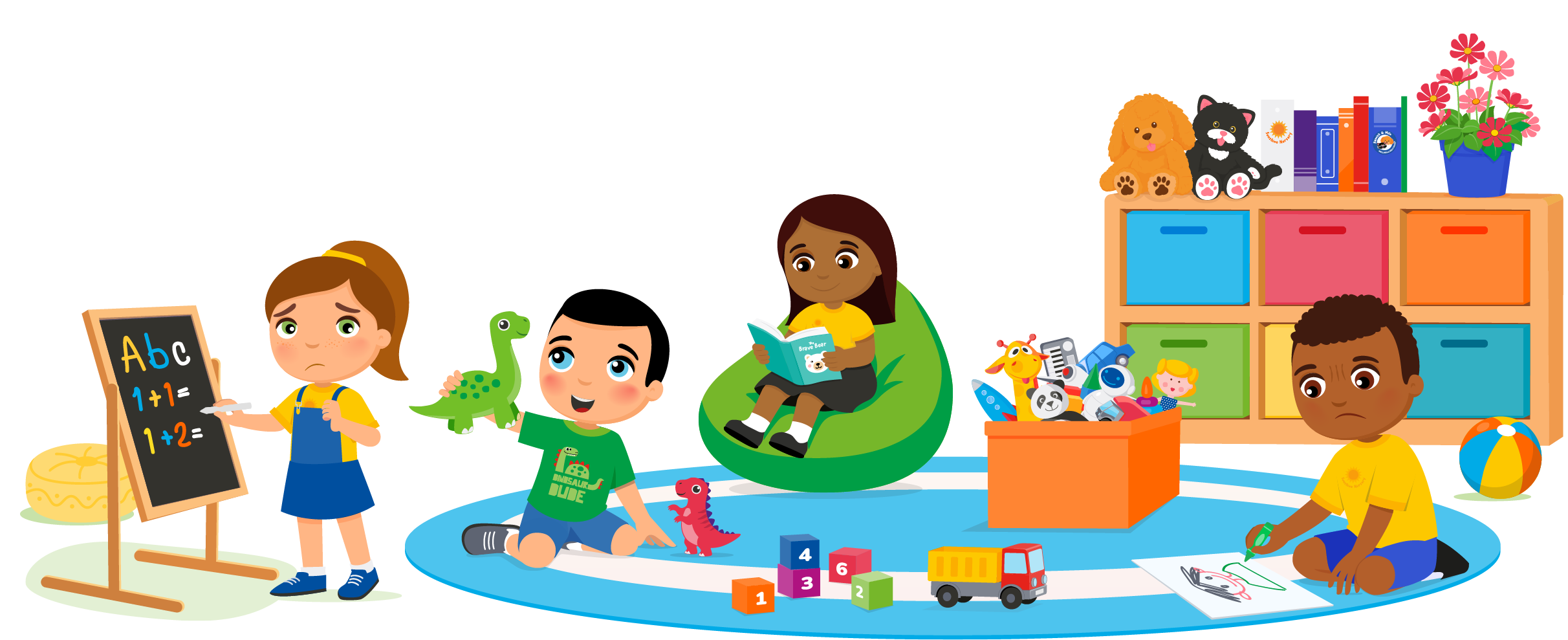
Social and emotional learning provides young children with opportunities to develop the skills, understanding and emotional capacities that will support them throughout life and learning. During the early years, children are beginning to develop:
These skills do not develop in isolation. They grow through relationships, repeated experiences, play and the support of emotionally available adults.
By embedding SEL within everyday early years practice, we can strengthen the protective factors that support children’s emotional wellbeing and help them navigate life’s challenges with growing confidence.
Supporting personal, social and emotional development (PSED)
Social and emotional learning is closely aligned with personal, social and emotional development (PSED), one of the three prime areas of the Early Years Foundation Stage (EYFS).
The Hamish & Milo early years approach supports the three areas of EYFS PSED:
Through creative activities, puppets, stories, sensory experiences, movement, reflection and guided interaction, children have repeated opportunities to practise these developing skills in ways that are engaging, predictable and meaningful.
Self-awareness as a foundation for emotional development
At Hamish & Milo, we intentionally place self-awareness at the beginning of our early years progression.
This is not intended to replace or reorder the EYFS framework. Rather, it reflects our understanding of the developmental foundations that support children’s progression within PSED.
As children develop their capacity to regulate emotions, manage themselves and navigate relationships, they need opportunities to explore who they are, what they feel, what they need and what makes them unique.
Young children are beginning to explore questions such as:
These seemingly simple questions are powerful building blocks for emotional literacy. As children develop a greater awareness of their internal experiences, they become increasingly able to recognise and communicate their feelings and needs, understand what helps them and begin to make choices that support their own wellbeing.
Our Emotional Literacy Pathway
From the adult to the child, and from the self to relationships.
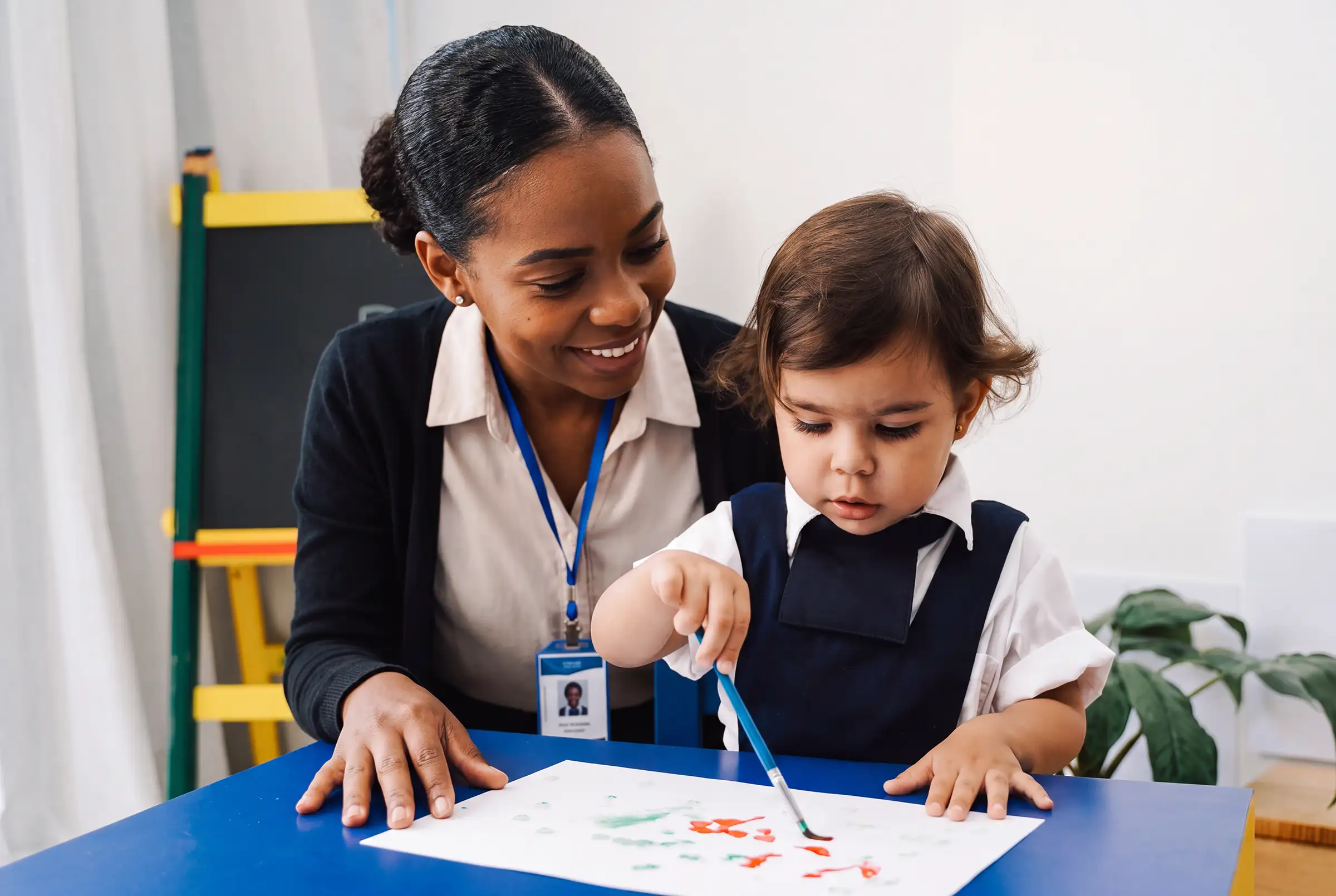
At Hamish & Milo, we see social and emotional development as a pathway rather than a collection of separate skills. This pathway begins with the adult. Young children depend on emotionally available, self-regulated adults to create the emotional safety and connection they need to explore, communicate and learn. Through emotional safety and co-regulation, children gradually develop the capacity to recognise, understand and manage their own internal experiences.
Our Emotional Literacy Pathway recognises the importance of these relational foundations alongside the developing social and emotional competencies of self-awareness, self-regulation, motivation, empathy and social skills.
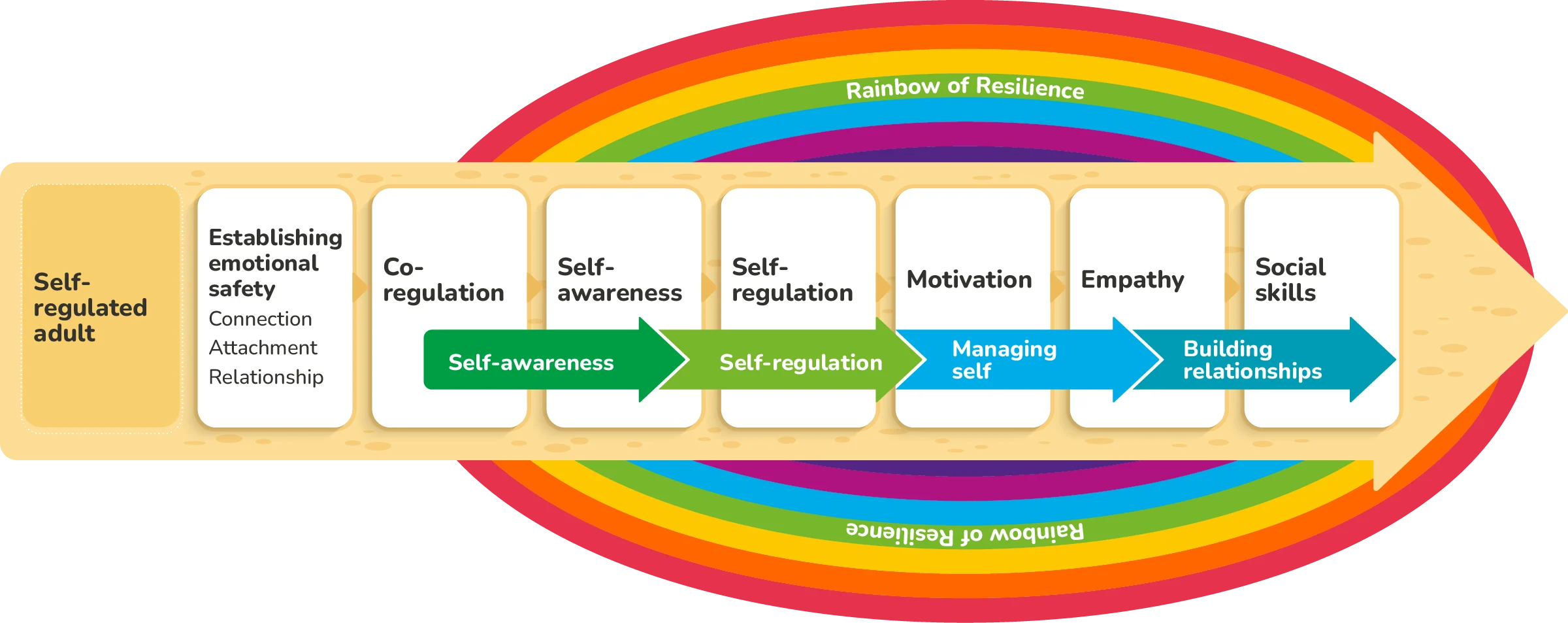
For the early years, we have aligned this developmental pathway with the three areas of EYFS PSED:
Self-regulated adult → Emotional safety → Co-regulation → Self-awareness → Self-regulation → Managing self → Building relationships
This reflects an important principle of our approach:
Children learn to regulate through relationships before they can increasingly regulate for themselves.
The adult’s role is therefore central. We do not simply teach children strategies for managing emotions; we create the relational conditions in which emotional development can take place.
Building a Rainbow of Resilience
The protective capacities that help children thrive.
At Hamish & Milo, we see resilience as something that develops through relationships and experience.
Resilience is not simply a child’s ability to cope independently. It grows when children experience trusted relationships, emotional safety and opportunities to understand themselves, manage feelings, try again, solve problems, connect with others and experience themselves as capable, valued and able to make a difference.
Our Rainbow of Resilience brings together the emotional, social and relational capacities that help protect and strengthen children’s wellbeing. These foundations begin with connection and co-regulation, and grow through self-awareness, emotional regulation, confidence, motivation, empathy, relationships and social understanding.
For young children, every successful experience of being understood, soothed, encouraged, included or supported to try again contributes to this developing sense of resilience. We are not simply teaching children to cope with life’s challenges. We are helping them develop the emotional and relational foundations they need to meet those challenges with growing confidence.
Supporting SEL and PSED with Hamish & Milo Foundation
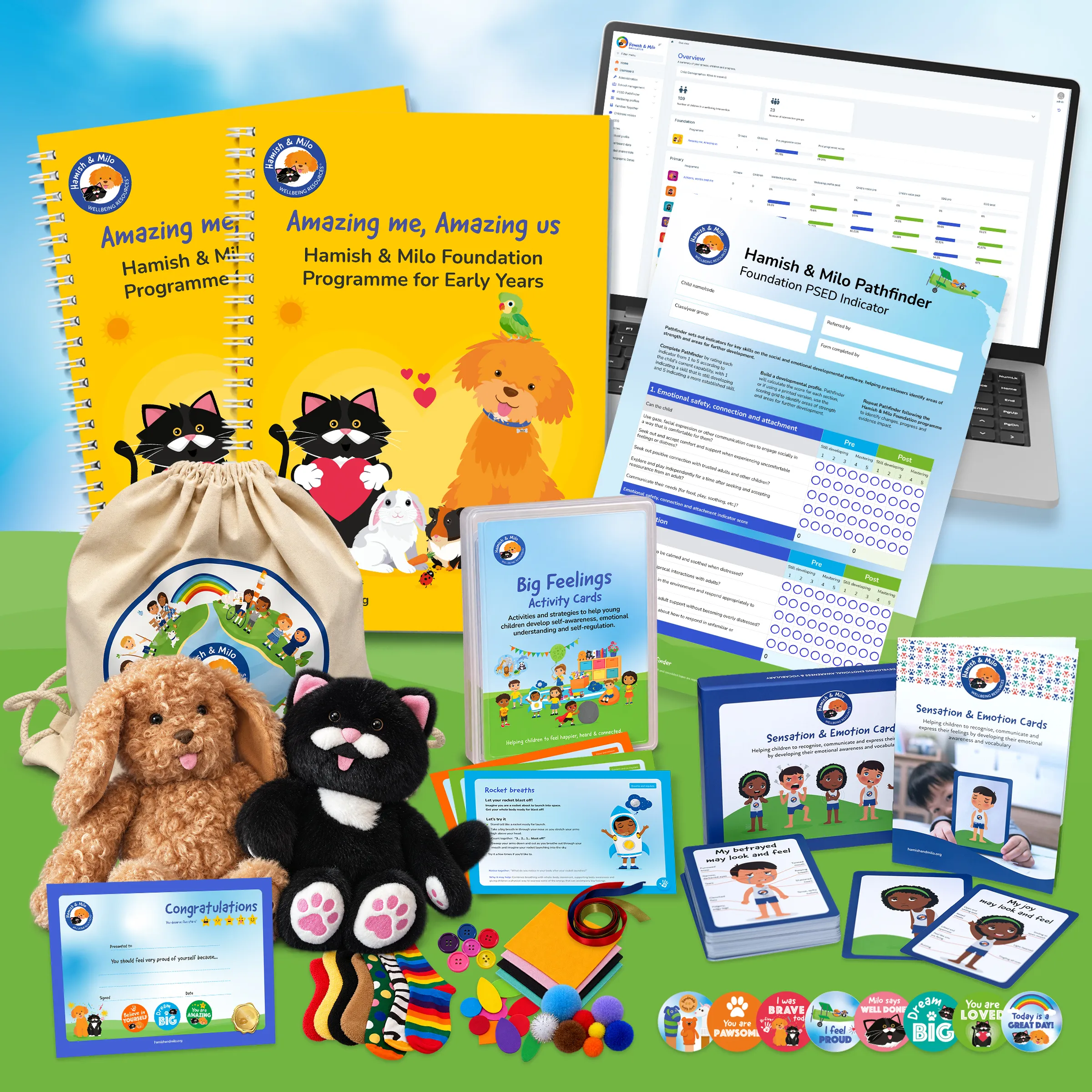
Designed for nursery and reception children aged three to five, Hamish & Milo Foundation provides a structured, playful and developmentally appropriate approach to social and emotional learning, aligned with EYFS PSED.
Our approach brings together emotional literacy, relational practice, creative activities and practical resources to support both children and the adults around them.
By embedding social and emotional development from the earliest years, we can create environments where children feel safe, know themselves, express their feelings, develop independence, connect with others and experience a strong sense of belonging.
Helping children, from the very beginning, feel happier, heard and connected.