Why PSED and early social and emotional learning matter
Giving children the emotional foundations they need to thrive
Before children can learn about the world, they are learning about themselves, their feelings and their place within it. The early years are a time of extraordinary social and emotional development. Children are learning who they are, how relationships work, what feelings mean, how to communicate their needs and how to navigate a world that can sometimes feel exciting, unfamiliar or overwhelming. These are not skills that sit alongside learning. They are the foundations that make learning, relationships and wellbeing possible.
When children feel safe, connected and valued, they are better able to explore, communicate, participate, persevere and learn. When they develop a growing understanding of themselves and their emotions, they are better equipped to manage challenges, build relationships and experience a sense of belonging.
This is why Personal, Social and Emotional Development (PSED) is so important in the early years and why investing in children’s social and emotional development from the very beginning matters.
PSED is not an additional area of learning that sits alongside the curriculum. It is part of the foundation on which children’s learning, relationships, wellbeing and development are built. The Department for Education describes PSED as crucial to children’s healthy and happy lives and fundamental to cognitive development.
At Hamish & Milo, we believe that supporting this development early can make a profound difference.
The foundation comes first
Young children are still learning how emotions feel in their bodies, what happens when feelings become big, how to communicate their needs, how to manage frustration and how to navigate relationships with other people. They cannot simply be expected to arrive at school already knowing how to regulate themselves, resolve conflict, cope with disappointment or understand another person’s perspective. These are skills that develop through relationships, modelling, repetition, play and co-regulation.
A child supported by emotionally available adults learns over time to feel safe, to know their feelings are acceptable and that they are lovable. They learn that they can respond to and survive big feelings. A child whose feelings are noticed and named begins to develop emotional language. A child who experiences successful relationships begins to understand trust, kindness, cooperation and repair. A child who feels seen, heard, valued and included begins to develop the confidence to participate and learn.
This is the thinking behind the Hamish & Milo Foundation approach.
From “I am me” to “we are us”
Our Foundation programme is designed around the idea that social and emotional development is a progression.
Children first need to develop Self-awareness:
They then begin to explore Self-regulation:
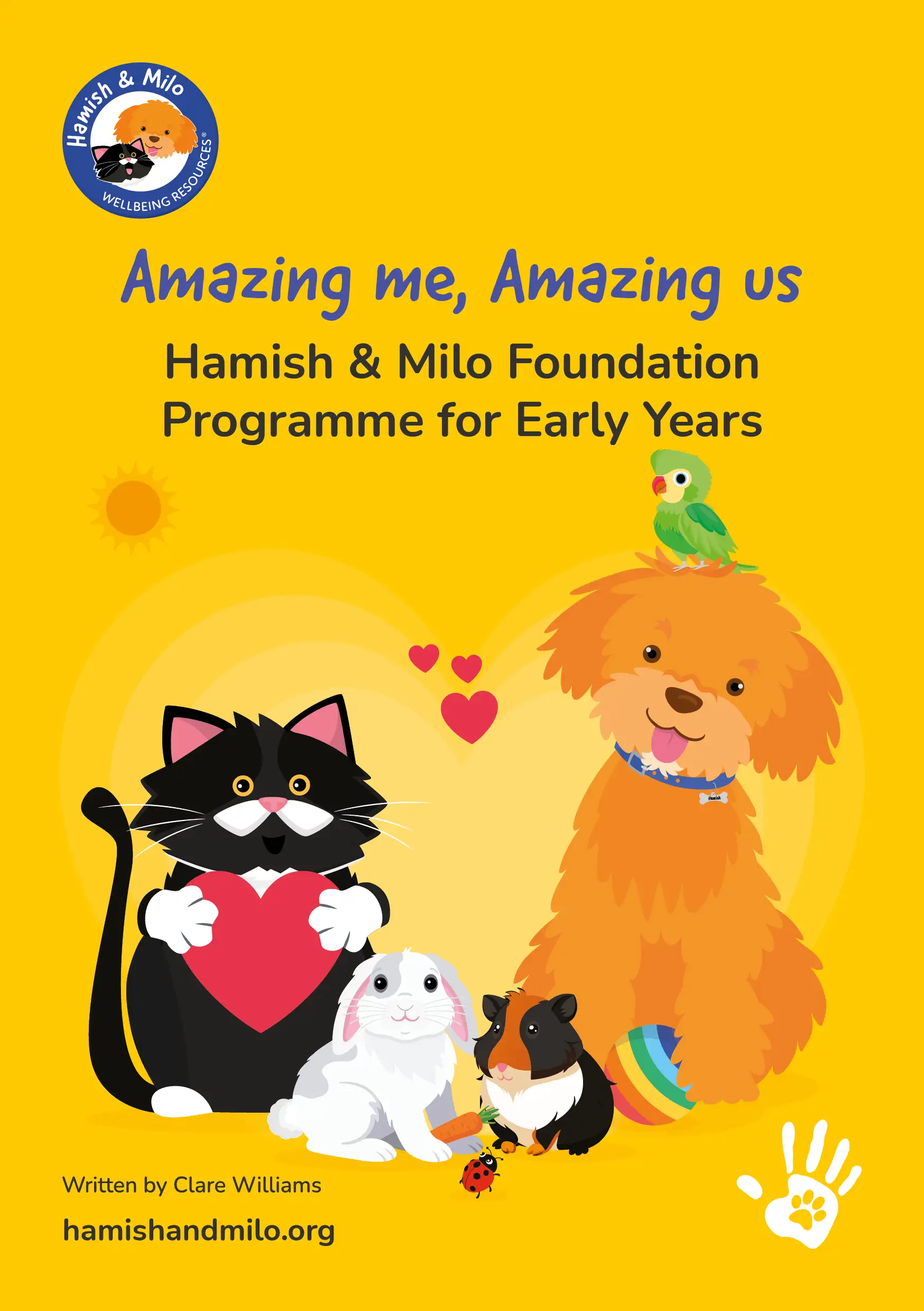
From there comes Managing self: developing confidence, independence, perseverance and the ability to make choices and cope with challenges. Then comes Building relationships: friendship, kindness, empathy, cooperation, belonging and learning how to repair relationships when things go wrong. This progression is reflected in Amazing Me, Amazing Us, our Early Years Social and Emotional Literacy Programme for Nursery and Reception children.
Through creative activities, stories, puppets, sensory experiences, movement, circle time and guided reflection, children develop the early language and experiences they need to understand themselves and others. Young children learn through relational safety and care, repeated experiences and playfulness, which are at the heart of the approach.
Co-regulation before self-regulation
One of the most important messages we can share with practitioners is that young children cannot be expected to regulate emotions independently before they have experienced regulation within relationships.
When a child is overwhelmed, the first response should not always be, “How can we get them to calm down?” It might instead be: “How can I help this child feel safe enough to calm down?” An adult’s calm voice, predictable response, emotional language, proximity, playfulness and acceptance can all become part of the child’s experience of regulation. Over time, these experiences become internalised.
This is why the adult is so central to the Hamish & Milo approach. Practitioners are not simply delivering activities; they are modelling, scaffolding, co-regulating and creating emotionally safe spaces in which children can practise new skills.
Early intervention means noticing the small things
Early intervention is not about waiting until a child reaches crisis point. It is about noticing the small signs early:

These behaviours are communication, and when we understand them in this way, we can respond with curiosity rather than judgement and with support rather than disapproval or rejection.
High-quality early years provision has an important role in identifying emerging needs and putting support in place early. This is particularly significant within the current direction of SEND reform, which places greater emphasis on inclusion, earlier action and reducing barriers to support.
An important opportunity for Early Years settings
There is also a significant funding opportunity for settings in England in 2026–27. The government’s new Inclusive Early Years Fund provides £47 million of additional funding to support the early years sector to become more inclusive of children with SEND. The funding is intended to support setting-wide inclusive practice and early intervention rather than relying solely on individual child-based applications.
The guidance identifies areas such as:
This creates an important opportunity for early years leaders to think beyond individual interventions and ask: How can we strengthen the emotional and relational foundations of our whole setting?
Inclusion begins long before a child is taken down a path of diagnosis. It begins with whether children feel that they belong. It begins with adults understanding behaviour as communication and children having opportunities to develop emotional language, self-awareness, regulation and relationships. And it begins with investing in practitioners who have the knowledge, confidence and tools to support these areas well. The government guidance specifically identifies setting-wide inclusive practice and early intervention as purposes of the new funding.
Investing in the beginning, not waiting for the problem
There is a powerful argument for investing early. When children develop emotional literacy, confidence, communication, relationships and regulation in the early years, they are developing skills that they will draw upon throughout their education. These skills support attention, engagement, communication, behaviour, resilience, independence and readiness for learning. They also create the foundations for future social and emotional learning.
At Hamish & Milo, our ambition is therefore not simply to provide an early years programme. It is to create a pathway of emotional development that begins in the Foundation years and continues throughout primary education. The early years are where the foundations are laid; primary education is where those foundations are strengthened. Throughout that journey, the central question remains the same: How do we help every child feel safe, understood, capable and that they belong?
Every child deserves a strong emotional foundation
We often talk about children being ‘ready for school’. Perhaps we should also ask whether our schools and settings are ready to support the whole child.
A child does not need to have everything figured out before they begin their educational journey. They need adults who understand development. They need relationships that help them feel safe. They need opportunities to play, explore, communicate and make mistakes. They need adults who can help them understand their feelings. They need to experience belonging and they need playful, fun and repeated opportunities to discover:
That is the foundation. It is why early social and emotional learning matters.
Hamish & Milo Foundation
The Hamish & Milo Foundation approach supports early years settings to place PSED, emotional wellbeing, inclusion and relationships at the heart of children’s earliest learning experiences.
Our Amazing Me, Amazing Us programme provides a structured, playful and relational approach for Nursery and Reception, supporting children across Self-Awareness, Self-Regulation, Managing Self and Building Relationships, while giving practitioners practical ways to develop emotional literacy and co-regulation within everyday practice.
With new opportunities through the Inclusive Early Years Fund, now is an important time for settings to consider how investment in early intervention, practitioner development and setting-wide inclusion can strengthen outcomes for children.
Because when we invest in the foundation, we invest in everything that comes next and we help children to feel happier, heard and connected.